
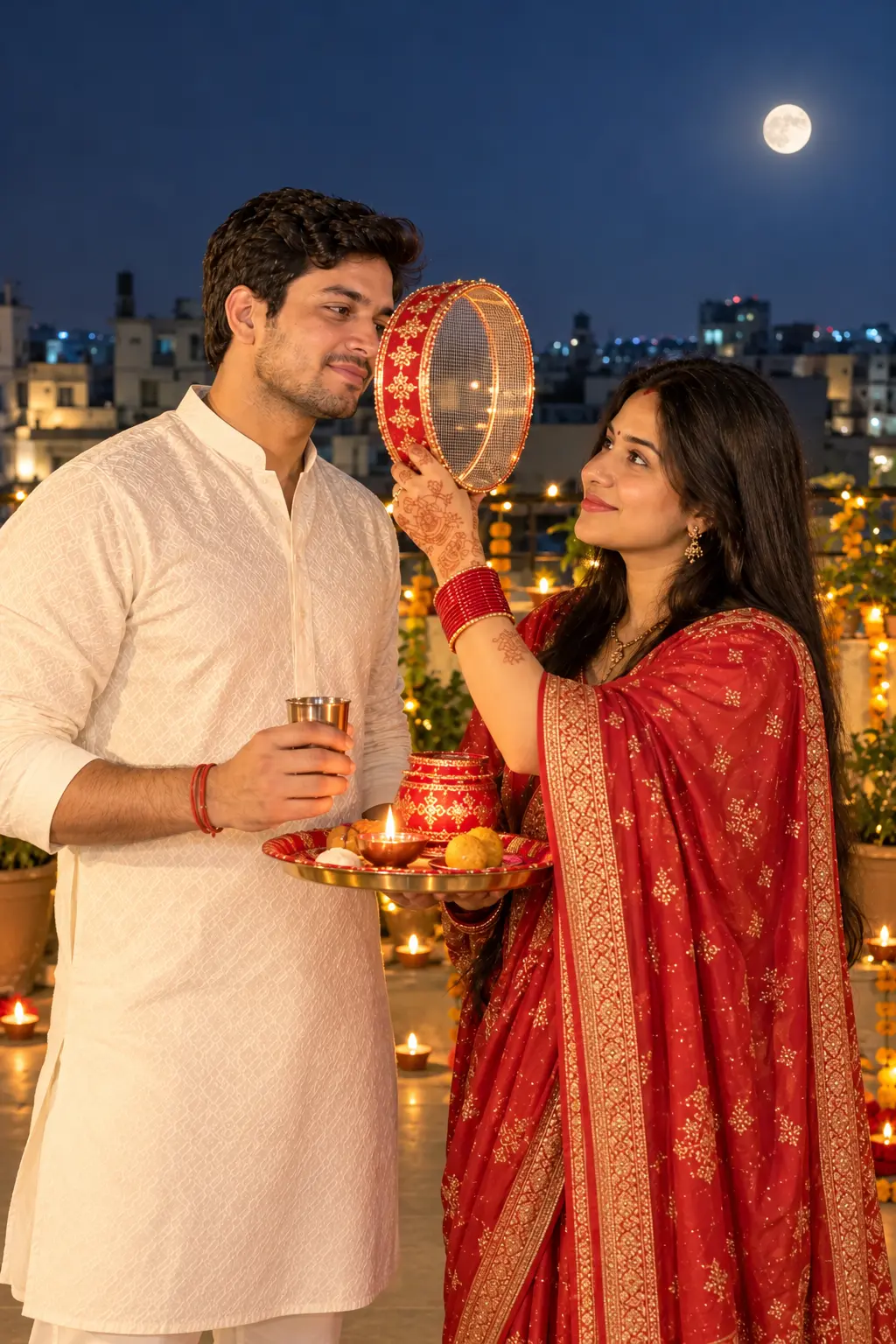
KARWA CHAUTH PHOTO PROMPT FOR CHATGPT | Karwa Chauth AI Photo Editing Prompt
Create a realistic Karwa Chauth couple photo using ChatGPT. This AI photo-editing prompt helps preserve your original face, recreate your home terrace, and capture the traditional moment of a wife looking at her husband through the chhanni.
Festival Prompts
Intermediate
Prompt
Copied 29 times
Edit the uploaded reference photographs to create one beautiful, natural, ultra-photorealistic photograph of the same husband and wife celebrating Karwa Chauth on their actual Indian home terrace. The final image must look like a real photograph captured during an authentic Hindu Karwa Chauth celebration, not an AI-generated couple or an artificial composite. The three most important requirements are: Preserve the exact real facial identities of both the husband and wife. Reproduce the exact terrace shown in the uploaded terrace reference photo. Show the wife looking directly at her husband through a traditional Karwa Chauth channi (sieve), with the husband looking lovingly back at her. Do not sacrifice facial identity, location accuracy, or the correct ritual for artistic styling. 1. REFERENCE PHOTOGRAPH INSTRUCTIONS Carefully examine all uploaded photographs before editing. Husband's photograph: This is the authoritative reference for the husband's face, hairstyle, skin tone, age, facial structure, and distinguishing features. Wife's photograph: This is the authoritative reference for the wife's face, hairstyle, skin tone, age, facial structure, and distinguishing features. Terrace photograph: This is the authoritative reference for the location, architecture, background, floor, walls, railings, surrounding buildings, and camera perspective. Use each image only for its intended purpose. Never use the wife's facial features for the husband or the husband's facial features for the wife. If multiple reference photographs are supplied, use them together to understand each person's real appearance. 2. STRICT IDENTITY PRESERVATION — HIGHEST PRIORITY Preserving the couple's real identities is more important than any other visual detail. Keep both faces as close to their original reference photographs as possible. Treat the uploaded portraits as identity references, not inspiration for creating similar-looking people. Preserve the following for each person: Original face shape, forehead, jawline, and cheek structure. Eye shape, eyelids, eyebrows, nose, lips, ears, and facial proportions. Natural skin tone, skin texture, and distinguishing marks. Original hairline, hairstyle, and natural hair texture. Apparent age and recognizable individual characteristics. Natural body proportions and overall appearance. Do not replace their faces with newly generated faces. Do not blend identities, beautify, reshape, slim, smooth, de-age, or artificially enhance their facial features. Do not change the wife's face to make her look like a bridal model. Do not change the husband's face to make him look like an actor or fashion model. Festive clothing, jewellery, lighting, and expressions may be adjusted, but the underlying identities must remain recognizable and faithful to the reference photos. Keep facial expressions subtle and natural. If a new pose makes exact facial preservation difficult, prioritize the faces and use a simpler pose. Important: Do not redesign the entire image when only a targeted edit is necessary. Preserve existing image details wherever possible. 3. PRESERVE THE EXACT ORIGINAL TERRACE Use the uploaded terrace photograph as the fixed location reference. Retain its recognizable architectural features, including: Original wall positions, colours, and textures. Terrace floor, railings, parapets, doors, and visible structures. Water tanks, neighbouring buildings, and other visible background elements. Original spatial proportions and perspective. Do not replace the terrace with a luxury rooftop, palace, hotel, resort, garden, or an unrelated Indian house. Do not invent new architectural elements or remove distinctive features. Add only a few subtle festive decorations, such as warm string lights, small diyas, or a modest marigold garland, if they fit naturally into the actual space. The terrace must remain recognizable as the exact location in the reference photograph. 4. WIFE'S OUTFIT AND APPEARANCE Dress the wife in an elegant traditional Indian saree suitable for Karwa Chauth. Use a deep red, crimson, or maroon saree with a tasteful gold border and realistic fabric texture. The saree should be naturally draped, with believable folds and a properly positioned pallu. Add restrained traditional accessories: Red or maroon bangles. Traditional earrings and a modest necklace. A small red bindi. Subtle sindoor in the hair parting, if appropriate. Natural festive makeup. Mehndi on the hands if visible and realistically rendered. Preserve her original hairstyle as much as possible. The clothing and jewellery should look authentic and proportionate. Avoid excessive ornaments, exaggerated bridal makeup, artificial skin, or a dramatic transformation of her appearance. Her face must remain her own face throughout the edit. 5. HUSBAND'S OUTFIT AND APPEARANCE Dress the husband in a simple, elegant cream, ivory, or off-white Indian kurta-pajama. The clothing should fit naturally and show realistic fabric folds and texture. A subtle Nehru jacket may be included only if it suits the composition. Preserve his original hairstyle, skin tone, face, body shape, and natural appearance. Avoid excessive styling or changes to his physical proportions. 6. EXACT KARWA CHAUTH RITUAL AND BODY POSITION Capture the couple during the traditional Karwa Chauth ritual after moonrise. The exact action is: the wife looks at her husband through the channi, and the husband looks back at her. Wife's position The wife stands naturally on the terrace, facing her husband at a comfortable distance. She holds a traditional round Indian channi (sieve) in front of her face, raising it to a natural height. Her face remains visible, and her eyes can clearly be seen through the sieve's mesh. She looks directly through the mesh into her husband's eyes. Her gaze must not be directed toward the camera or toward the moon in this final captured moment. Her expression is gentle, affectionate, and devotional, with a subtle natural smile. If physically comfortable, she holds a decorated puja thali in her other hand. If that creates an awkward pose, place the thali on a nearby stable terrace ledge within reach. Husband's position The husband stands directly opposite his wife, facing her naturally. He looks into her eyes through the sieve with an affectionate, gentle expression. He may hold a small glass of water, ready for the customary ritual following moon-sighting. His posture should be relaxed and natural, with his arms and hands in physically believable positions. Sieve placement — critical detail The channi must be a recognizable traditional circular sieve with a realistic mesh and handle. Position it naturally between the wife's face and her husband, aligned with her line of sight. The husband must remain clearly visible beyond the mesh. The wife's eyes must remain visible through the sieve's openings. The sieve must not cover the entire face, obscure both eyes, float in the air, appear pasted onto the image, or sit beside the wife's head. Her fingers must grip the handle naturally, with realistic anatomy. The couple's eye contact through the sieve is the central subject of the photograph. Make this action immediately understandable without needing a caption. 7. TRADITIONAL PUJA THALI AND RITUAL ITEMS Include a realistic traditional Karwa Chauth puja thali with a small lit diya, roli or kumkum, uncooked rice, and a few traditional sweets. A decorated karwa pot may be placed on a stable terrace surface or held naturally if the pose allows. Every object must have realistic size, shape, texture, and placement. Do not overcrowd the scene with unnecessary props. Do not include unrelated religious objects or combine rituals from different festivals. The puja items should complement the couple, not distract from their faces or eye contact. 8. MOON AND EVENING ENVIRONMENT Set the scene in the evening after moonrise. Include a realistic full moon in the visible sky above the terrace, positioned naturally in the background. The moon is part of the environment. In the final pose, the wife is looking through the sieve at her husband, not at the moon. Use a subtle twilight-blue sky, warm diya illumination, and gentle ambient evening light. The lighting must be physically consistent with the actual terrace and surrounding structures. Avoid oversized moons, fantasy skies, excessive stars, artificial glow, dramatic fog, or unnatural celestial effects. 9. PHOTOGRAPHIC COMPOSITION Create a vertical portrait photograph, approximately 4:5 aspect ratio. Use a natural medium-full framing, ideally showing the couple from around the waist or thighs upward, with enough space to include: Both recognizable faces. The wife's raised sieve and visible eyes. The husband's face beyond the sieve. The puja thali or nearby ritual setup. The original terrace in the background. A visible portion of the evening sky and moon. Use a natural camera angle and realistic perspective. The faces, sieve, and eye contact should be the main focus. Keep the background sufficiently visible to establish the actual location. The couple should appear engaged in the ritual rather than posing rigidly for a wedding portrait. Do not force them into an unnatural embrace or an exaggerated romantic pose. 10. LIGHTING AND REALISM Aim for the appearance of an authentic professional DSLR photograph. Use: Natural skin texture and realistic facial detail. Soft evening ambient light. Gentle warm illumination from nearby diyas and festive lights. Balanced exposure and physically consistent shadows. Realistic fabric folds, jewellery reflections, and skin highlights. Moderate depth of field with both faces and the sieve clearly readable. Natural colour grading with restrained reds, warm golds, and a subtle blue evening sky. Avoid excessive HDR, oversaturation, artificial sharpness, heavy filters, excessive background blur, and cinematic effects that make the scene look synthetic. The result should feel personal, intimate, traditional, and believable. 11. STRICT NEGATIVE PROMPT Do not generate or introduce any of the following: Face and identity errors: different people, generic AI faces, face replacement, face swapping, identity blending, altered facial proportions, changed jawline, changed nose, changed lips, changed eyes, changed skin tone, changed age, artificial beautification, excessive makeup, plastic skin, skin smoothing, de-aging, uncanny expressions, asymmetrical eyes, distorted facial features. Ritual errors: wife looking at the moon through the sieve in the final frame, wife looking at the camera, wife looking away from her husband, husband looking away, incorrect eye contact, sieve beside the face, sieve behind the head, opaque sieve, missing sieve, husband hidden by the sieve, distorted mesh, incorrect ritual objects, missing puja thali, unrelated festival rituals. Anatomical errors: extra fingers, missing fingers, fused fingers, distorted hands, duplicated arms, extra limbs, twisted wrists, unnatural elbows, broken anatomy, impossible hand positions, floating objects, disconnected hands, unnatural body proportions. Location errors: different terrace, luxury rooftop, palace, hotel, resort, unrelated house, invented architecture, missing distinctive terrace features, altered wall layout, changed floor, unrealistic railings, impossible perspective, excessive decorations, artificial background. Clothing errors: incorrectly draped saree, floating fabric, distorted jewellery, duplicated bangles, excessive ornaments, unrealistic embroidery, Western party clothes, artificial fabric textures, altered body shape. Visual errors: cartoon, illustration, painting, CGI, 3D render, video-game appearance, oversaturated colours, excessive HDR, heavy blur, fake bokeh, artificial lens flare, unrealistic moonlight, giant moon, fantasy sky, harsh flash, low resolution, pixelation, compression artifacts. Unwanted additions: text, captions, logos, watermarks, borders, stickers, collage layouts, duplicate people, unrelated people, random props, unrelated religious symbols. 12. FINAL EXECUTION INSTRUCTIONS Make one cohesive, photorealistic edit using the supplied photographs. Treat the original husband and wife photos as the authoritative references for their identities. Treat the terrace photo as the authoritative reference for the location. Preserve existing details wherever possible. Change only what is necessary to create the traditional Karwa Chauth celebration. Do not regenerate the couple's faces simply to fit the new styling. Prefer a natural, simple pose and realistic clothing over changes to facial identity. If any instruction conflicts with facial identity preservation, facial identity takes priority. If elaborate decorations conflict with terrace accuracy, terrace accuracy takes priority. FINAL SUCCESS CRITERIA The result must show the same husband and wife, with their original recognizable faces, on the same terrace, in traditional Karwa Chauth clothing. The wife must be looking directly at her husband through the channi, and he must be looking lovingly back at her. The puja items and full moon should support the scene without distracting from the couple. Produce one natural, high-quality photograph. No text, no poster design, no collage, no artificial face replacement, and no unrelated changes.
Try it in:
Save this prompt
Sign in with Google to keep your favourite prompts in one place — they will be waiting for you on any device.
You do not need an account to copy this prompt — only to save it.
Settings
- Aspect ratio:
- 9:16
- Model:
- GPT-5
- Style:
- portrait photography
Works with
- ChatGPT
- Google Gemini
- Claude
- Grok
- Kling AI
A tool not listed here has not been tested with this prompt — it is not a claim that the prompt fails there.
How to use this prompt
How to Create Your Karwa Chauth Photo
- Open ChatGPT and start an image-editing conversation.
- Upload a clear photo of the husband, a clear photo of the wife, and a wide photograph of the actual terrace.
- Copy the main prompt from this page and submit it with the reference images.
- Review the generated image, paying particular attention to both faces, the terrace, and the wife's eye contact through the channi.
- If the faces change, upload the original portraits again and request a targeted correction instead of regenerating the entire scene.
- If the sieve or hand position looks incorrect, request a small, specific pose correction.
Pro tip: Use sharp, naturally lit reference photos. ChatGPT may still alter facial details during generation, so review the result carefully. Exact facial preservation cannot be guaranteed by a text prompt alone.
Tags
Related prompts
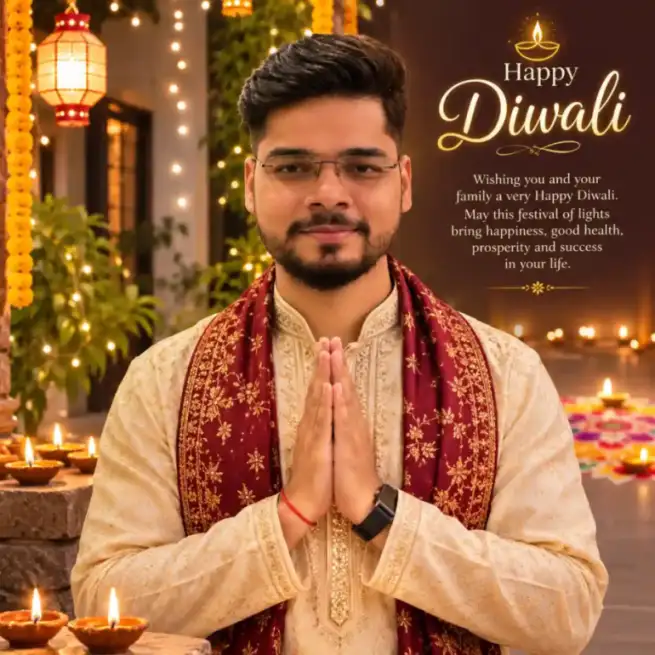
Diwali Greeting Prompt – Elegant Namaste Portrait in Ivory Kurta
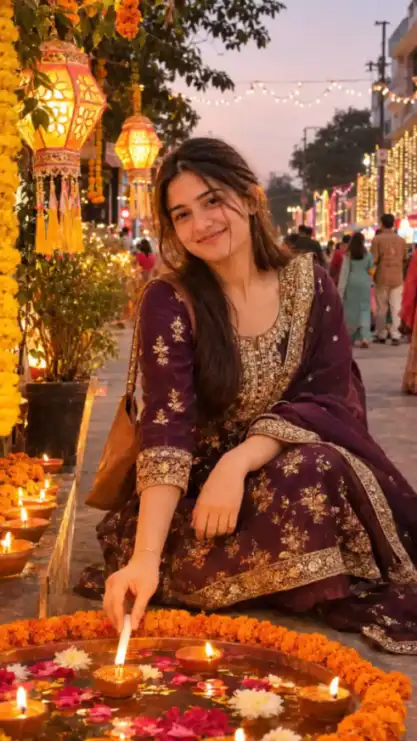
Best Diwali Prompt for Girl celebrating peacefully and decorating her Rangoli

Diwali Prompt for Men – Cinematic Fireworks Portrait with Face Reference

Karva Chauth Prompt Couple For Karwa Chauth Celebration Prompt
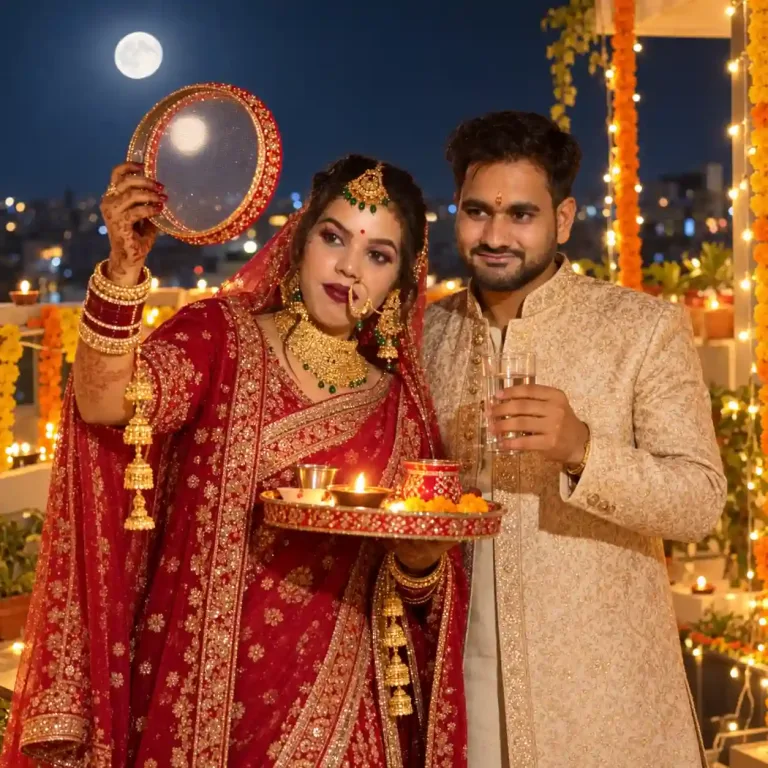
Karwa Chauth Photo Prompt for Couple on Rooftop Seeing the Moon
